Personal Development
Curriculum Aims
We believe our responsibility to educate students extends beyond their academic studies. Our Personal Development curriculum is carefully designed to instil our core values, ensure our students understand the wider world and their place within it and enrich their wider experience so that they are well placed to thrive in modern society.
We insist on a curriculum that removes the notion of disadvantage, encourages resilience, provides equity and equality of opportunity and instils independence and aspiration in our students, so they can become hard working, respectful, tolerant and compassionate citizens who are ready to make a difference.
Personal Development incorporates:
- Social, Moral, Spiritual and Cultural (SMSC) Education
- Religious Education
- Relationships, Sex and Health Education (RSHE)
- Personal, Social and Health and Economic Education (PSHE)
- Careers Information, Advice and Guidance (CEIAG)
- Character Education
- Citizenship and British Values
- E-Safety
- Extra-curricular activities and wider opportunities
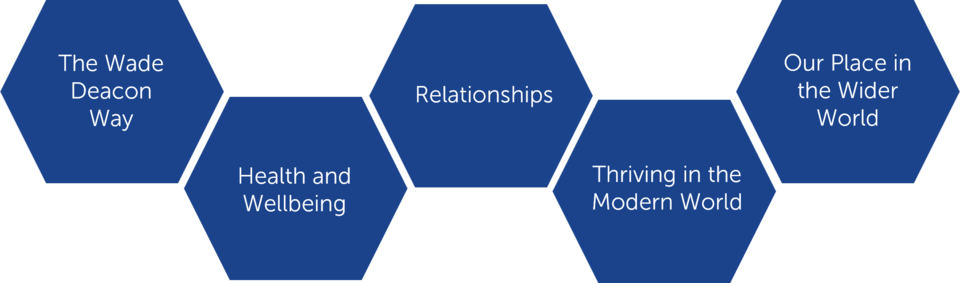
The Wade Deacon Personal Development Curriculum is comprised of five key themes:
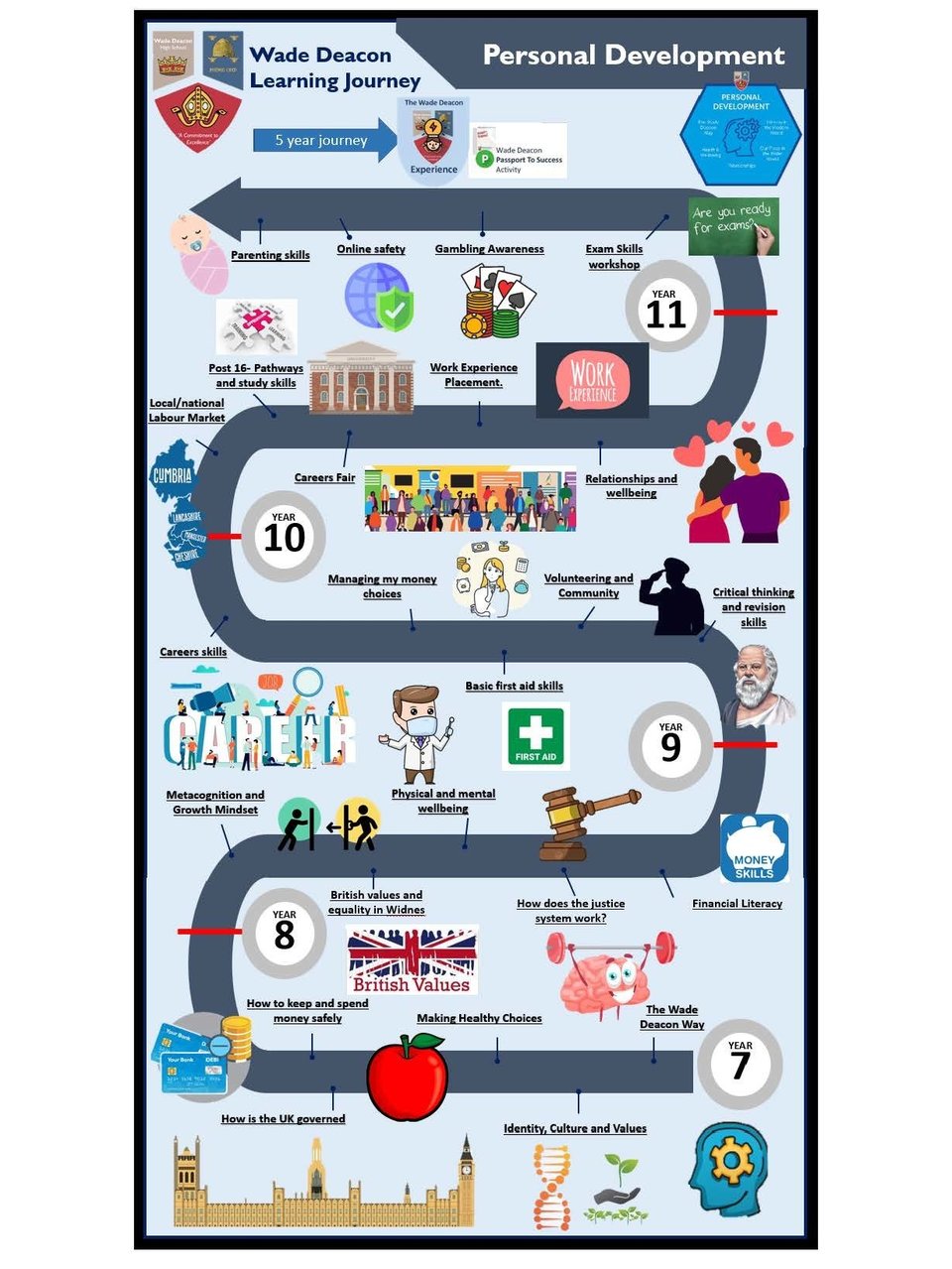
During their Personal Development learning journey, pupils follow a carefully sequenced Relationships, Sex and Health Education (RSHE) curriculum. Our curriculum reflects the Department for Education’s statutory RSHE guidance, updated for September 2026, and is designed to provide pupils with the knowledge and skills they need to develop healthy relationships, look after their physical and mental wellbeing, stay safe and make informed decisions as they prepare for adult life. Our RSHE curriculum is carefully sequenced across Key Stages 3 and 4. Pupils revisit important themes as they mature, developing increasingly sophisticated knowledge and understanding. Teaching is age and stage appropriate;
Key Stage 3 – Building knowledge, healthy relationships and staying safe - During Years 7–9, pupils develop the foundations needed to understand themselves, their relationships and how to keep themselves and others safe. Areas covered include:
- Healthy and respectful relationships – friendships, families, trust, respect and recognising positive and unhealthy relationships.
- Consent and personal boundaries – understanding consent, privacy, appropriate behaviour and the right to withdraw consent.
- Puberty and changing bodies – physical and emotional changes during adolescence, menstrual and reproductive health.
- Mental and emotional wellbeing – recognising emotions, developing resilience, managing difficulties and knowing how and where to seek help.
- Online relationships and safety – social media, online friendships, privacy, sharing images, harmful content, misinformation and managing online risks.
- Sexual harassment and harmful behaviour – recognising inappropriate sexualised behaviour, sexual harassment, misogyny and harmful sexual behaviour, including online.
- Equality and diversity – respecting difference and understanding the law relating to equality and protected characteristics.
- Healthy lifestyles – physical health, sleep, exercise, healthy eating and the risks associated with alcohol, drugs, smoking and vaping.
- Introduction to sexual health – factual, age-appropriate learning about sexual relationships, reproduction, contraception and sexually transmitted infections.
Key Stage 4 – Preparing for healthy, safe and responsible adult relationships- During Years 10–11, pupils build upon their KS3 knowledge and consider relationships, health and personal safety in greater depth and in the context of increasing independence and adulthood. Areas covered include:
- Intimate and sexual relationships – characteristics of healthy relationships, readiness, choice, respect, communication and emotional wellbeing.
- Consent, coercion and sexual violence – applying a secure understanding of consent to different situations and recognising coercive, controlling, abusive and exploitative behaviour.
- Sexual health and contraception – contraception choices, pregnancy, fertility, sexually transmitted infections, testing and accessing confidential health services.
- Pornography and sexualised media – understanding how pornography can present unrealistic or harmful expectations about sex, relationships, consent and body image.
- Online sexual safety – intimate images, image-based abuse, sextortion, AI-generated/deepfake sexual imagery and the relevant law.
- Sexual harassment, misogyny and harmful sexual behaviour – recognising and challenging harmful attitudes and behaviours and understanding how these can exist on a continuum and escalate.
- Mental health and wellbeing – recognising when additional support may be required, supporting others appropriately and knowing how to access professional help.
- Abuse and exploitation – recognising grooming, sexual and criminal exploitation, domestic abuse, coercive control and other forms of abuse.
- Equality, identity and the law – developing understanding of equality, discrimination, protected characteristics and relevant legal responsibilities.
- Gambling, addiction and financial wellbeing – understanding gambling-related harm, debt, addictive behaviours, the relationship between gambling and mental health, and how to recognise concerns and access support.
- Preparing for adulthood – making informed, responsible decisions about relationships, health, wellbeing and personal safety.
The curriculum is progressive rather than repetitive: topics introduced at KS3 are revisited at KS4 with greater depth and complexity so that pupils leave school equipped to make informed, safe and respectful choices in adult life. The revised guidance also strengthens expectations around sexual harassment and sexual violence, misogyny, online harms and mental wellbeing.
Learning Journey